Total Pageviews

Showing posts with label Vegan. Show all posts

Tuesday, December 20, 2011

Ohhhh... Fudge... My Mouth Is Watering!


 The first time I made fudge, I was, oh.... say 17 years old or so.  I melted the butter with the sugar over a low heat... then the chocolate chips... stirring and stirring, so it wouldn't burn you know.  I had little to worry about in terms of sugar diabeties, excess fat, blood pressure and the sort because I was, well, I was 17!  Those were the days I could slam down an entire pizza by myself without gaining a pound or even worrying about the health stuff.  These days are different!  It's been over a decade since those "eat anything, when ever and where ever" days and my outlook on nutrition differs greatly.  It took some extremism (eating disorders, no fat, calorie counting, you name it, I went there!) to finally arrive at the conclusion that I want a fully nutritional diet, the way God, the Creator and Savior of the world, intended.  That includes unaltered full fat, unaltered cholesterol, preferably organic, grass fed (never grain fed, not even at the end of their lives), no processed sugars of any kind, soaking grains, nuts and seeds, make everything in your own kitchen; Picking up what I'm putting down?!  That's right!  I've put down the boxes of manufactured foods in order to pick up raw foods that I make and enjoy (enjoy the awesome flavors as well as the nutritional benefits!)  All that aside, being that it's the Christmas season (yes, I am a Christian and celebrate Christmas), we needed some fudge around here so I went on the hunt!

Here's What I found!  Got your pen and paper handy?!  Enjoy this simple delicious recipe that is full of health benefits and nothing fake!

Ingredients: Five Total
  • 1C Coconut Oil
  • 3/4 C Carob Powder (you may use Cocoa Powder but Carob is a bit healthier and hardly different in taste plus, carob is naturally a bit sweet where cocoa isn't!)
  • 1/4 C Honey
  • 1/4 C Almond Butter (Try making it yourself.  I'll follow up with a post on "how to" within a day or so)
  • 1 Tbsp Vanilla Extract

Add it all to a bowl, preferably stainless steel.  Get a pot of water (approximately 2/3 of an inch of water will do) nice and hot.  When it starts to boil, put the bowl of ingredients on the pot, making sure the bottom of the pot is not touching the bottom of the bowl, we want indirect heat here.  Stir constantly until all the ingredients are mixed well and totally melted and dissolved (approx 5-10 minutes).  Next, line a baking dish with parchment paper and pour the mixed and melted ingredients into the dish. 


When it is totally solid, slice into cute shapes of your choice ; ) and enjoy!  Keep these babies cold as coconut oil melts at around 70 degrees.  Try putting nuts in it next time!

The original recipe came from a compilation of YouTube videos which you can find here.  The nice lady in the video series says the credit for the original recipe goes to Dr. Jordan Rubin.  Dr. Jordan Rubin is the author of "The Maker's Diet" which I plan on following come New Years when the food madness of this beautiful season is passed.  I will keep you posted and am planning on blogging about the details!  Looking forward to it!

As usual, I would love to hear your feedback!  Tell me if you made them and what you thought of them!  I personally think this is my new recipe for the rest of my life! 

Wednesday, July 20, 2011

I'm Jammin', I hope You Like Jammin' Too...

That's making jam of course!  This was my very first time making jam!  I used Pomona's Universal Pectin, which is made from citrus fruit peel, and honey!  For my first batch of jam ever, it was delicious!  I gave some away so we didn't have much to enjoy for ourselves but I did freeze some apricots (processed in the food processor and lemon juice added to help retain color) so I can make more when needed!!!

Making jam seemed daunting at first.  I had the pectin on hand for about a month, pulling it out from time to time to read the directions, only to fold them back up and put the little box back into the pantry.  Our plethora of apricots were just the thing to muster up the momentum I needed!  I didn't want any apricots to go to waste so I quickly took care of them by splitting them to take the seeds out and chopped them in my trusty food processor and made jam!  The process included mashing four cups of fruit mixed with 1/4 cup of lemon juice, and 4 tsp of calcium water (sounds complicated, I know - the calcium comes with the pectin and you add it to water via the directions - easy) then heated to just boiling.  Add 1/2 to 1 cup of sweetener (I used 3/4 cup of honey), 3 tsp of pectin mixed into sweetener, then added to the fruit/lemon juice/calcium water mixture,  stirring constantly for about two minutes until the pectin is dissolved.  Bring to another boil then pack mixture into jars of choice (the directions call for eight 8oz jars but it only filled six)!   Next, boil jars to seal the canning lids for about 10 minutes - time specified for jar size.  And you are finished!  Total time to make six 8oz jars of jam was approximately 30 minutes - WAY easier than I thought!

Have you made jam before?!  What flavors?!  How about any good "jammin'" stories?  Now that I am confident that I can produce delicious jam, I am looking forward to making all sorts of flavored creations!

Thursday, July 7, 2011

Summer's Bounty: Apricots

Eli's hand reaching for the gold...
After months of seeing the beautiful apricot flowers turn into little green balls which then transform into golden, redish-orange balls of delicious wonder, our apricots are finally ready to be picked. 
While historians are not completely sure where apricots originated, most of modern American production of apricots is from California with some in Washington and Utah.  In the world, apricots are grown in continental climates and Mediterranean climates like Turkey, Persia, and Australia (not excluding many other areas where they are grown). 
Apricot trees depend on a cold winter to allow for proper dormancy and a drier spring to allow their early blooms to come into their mature fruit stage.  Areas with late frosts have difficult times growing apricots (as we had this year - snow in April!).
Aren't they pretty : )

  • The mineral content in apricots is high, which makes them helpful in overcoming disorders like anemia, tuberculosis, asthma, bronchitis, etc.
  • The high copper and iron content in apricots increases the hemoglobin in the blood.
  • The vitamin A content in apricots is high and helps in reducing skin disorders like pimples and zits. Vitamin A also aids in improving eye-sight.
  • A certain substance called lycopene is present in apricots, which helps in the prevention of cancer and also protects the body from high cholesterol, thereby preventing heart disease.
  • Eating apricots helps in removing gallstones and also destroys intestinal worms. It also aids in digestion, since it reacts as an alkaline, breaking down food particles.
  • The fruit is considered to be a laxative and consuming it regularly will help you get rid of constipation. It is very helpful in getting rid of the waste in the body, due to its high fiber content.  (Source)
Now that we know a little bit about apricots, it's time to pick some!  That person in there is my husband, Eli, diving in (he's not afraid of the spiders like I am!).

We ended up with a huge basket full of them (apricots! - not spiders!).


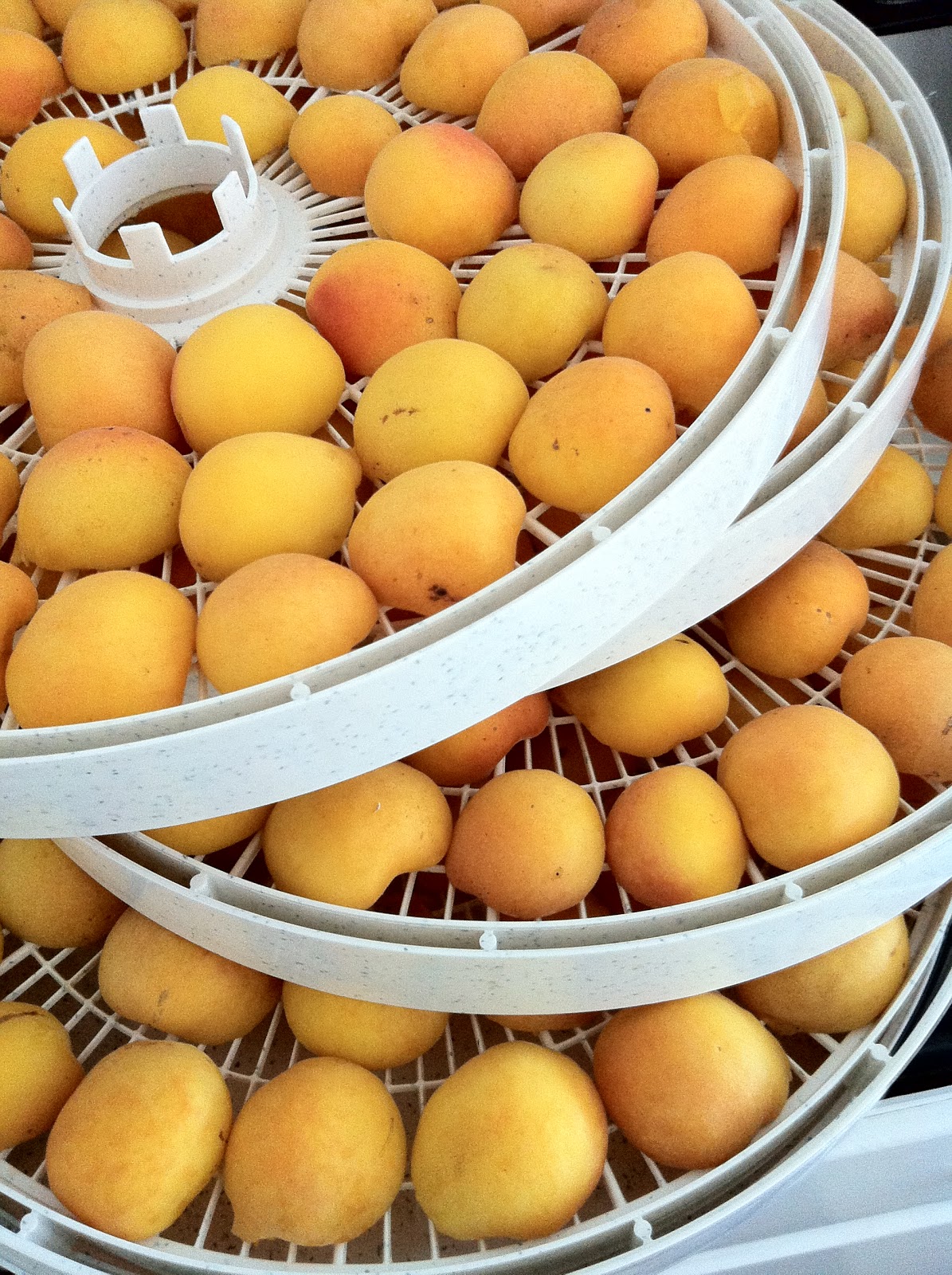
Here they are all washed up and ready to be dried. Organic and NOT treated with chemical preservatives.  Perfect just the way God made them!


This batch is going to go to my friend in Minnesota - Brandis and her family :)

There are plenty more on the tree for us here in California!

What do you think about apricots?  And were you even aware of how good these sweet-somethings are for you!?

(Disclaimer: Eating too many in one sitting can cause flatulence and loose bowels so either eat a ton when you are with a trusty mate or when you are hangin' low for the day : )

Thursday, June 23, 2011

What's In Season: Summer

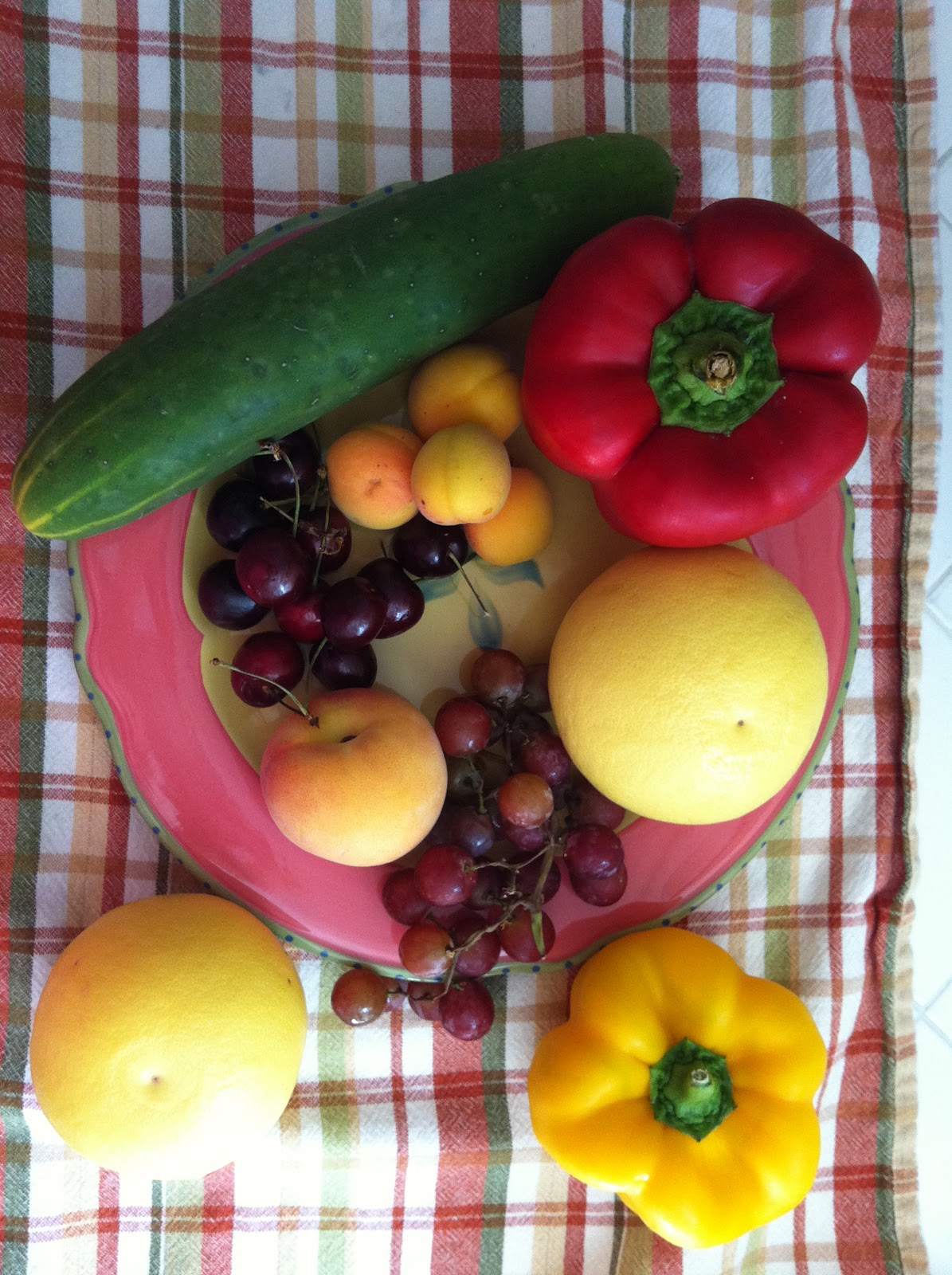
I love the old days.  The days when the family would be out on the farm taking from the land what they sowed into it.  During the summer, the whole family would be out at the garden picking fresh grapes from the vine, stopping from time to time to pop into their mouths a few bulging fresh grapes, after all, it's warm outside and there is nothing like a refreshing crisp grape in the mouth of the laborer!  How about down by the cherry trees and the peach trees.  The tops of the branches always had the best.  Poppa would take a long stick and shake the branch  while momma and the little ones would collect the fallen fruits.  Usually everything enjoyed by the family would be the seasons best.  Nowadays, we can take a walk, or shall I say drive, to the nearest grocery store and pick from a slew of colorful fruits and vegetables that are in season elsewhere in the world besides here in your own home region.  In order to achieve the bright colors of the out of season delicacies in your produce isle, grocers and huge industries have to spray wax and chemicals to preserve the "freshness" because the items have traveled for many days over sea and land to make it to your grocer in the appearance of "fresh".

How do we get around this?  Enjoy what is in season!  To me, prolonging self gratification tastes so much sweeter in the right season!  From sweet potatoes in the winter to juicy peaches in the summer, and an overall happier immune system to thank me for my patience : )  I believe that God intended for us to enjoy a vitamin packed orange in the peak of the cold winter days in order to help us fight off those "cold bugs" and "flu bugs" that are at our throats when the weather is damp and chilly.  Or how about the antioxidant rich slew of berries ready in the summer to fight off the sun's damage to our skin.  It's worth a thought!

At last, I hear you asking, no, screaming, "WHAT'S IN SEASON NOW?!"  I am glad you asked!  I looked it up for you and found a great website called Fruits & Veggies More Matters to lead us to the well anticipated answer to our question.  Here is a list compiled from the site:

And you thought eating in season would be boring ; )  Only more interesting!  See, "For maximum nutrition, we're better off eating closer to the source and relying on Mother Nature for seasonal produce to keep us in balance" ( Terry Walters, Clean Food).  While I believe God is in charge of keeping balance, I agree that balance is key and that eating in season means fresher, more nutrient dense foods, and more sustainable local economies. 

What do you think?!

Thursday, June 2, 2011

Ahhh Peanut Butter...

Why is Peanut Butter so addicting?!  I love it on dried fruit, fresh fruit, bread, tortillas, mixed with honey, maple syrup, and I could probably go on for an hour, but I'll spare you.  It's almost like my body wants peanut butter, not necessarily my taste buds.  And, I usually want it, lots of it, during the time when my body flips it's hormone production from estrogen to progesterone (aka PMS).

I did a little homework.  I actually googled why peanut butter is so addicting and I found out that it contains copper (mostly found in red meats), tryptophan and niacin (mostly found in chicken and fish),  protein, manganese, and folate.

Copper is important because it helps with arthritis, proper growth, connective tissues, brain stimulation, and so much more.   

Tryptophan is an amino acid that helps you sleep better and enhances moods.  Tryptophan is at work when larger amino acids tend to muscles when one exercises - hence the fact that working out makes people feel good.

Niacin is important for so many functions including but not at all limited to, blood circulation, digestion, helps in natural detox,  and can even slow the progression of HIV!

Protein, as so many know, is an essential nutrient in building bones, muscles, cartilage, skin and blood.

Manganese is a mineral that is an absolute for bone health as well as regulating blood sugar, healthy thyroid function, absorption of calcium, and much more!

Folate is vital in cell maintenance and repair,  DNA synthesis, formation of red and white blood cells,  inhibits colon cancer, and on and on.

So, craving peanut butter (all natural though - you don't want all that processing and sugar that comes with the other stuff) could be a way that your body is sweetly asking to replenish some of its much needed nutrients!  And as long as you are taking care of that vessel of yours, go ahead and have another spoon full (I am not a doctor though so if peanut butter does not do you well then by all means discontinue use)!

Wednesday, June 1, 2011

Tomato Paste and Ketchup


Homemade tomato paste seems daunting.  It sounds like hours in the kitchen bent over a stick beating tomatoes until they form a paste that is uniform in texture and dryness.  Good news:  that's not the case!  Peeling and seeding might be the toughest parts but blanching the tomatoes causes the skins to peel right off, and seeds are handled in no time at all thereafter.  With modern appliances like food processors and blenders, making a puree of tomatoes is hardly work at all. 

For tomato paste to be thick and rich, add a seeded red bell pepper into the mix and some salt.

Basic Ingredients include:

  • 5 pounds of end of season overripe tomatoes, peeled and seeded
  • 1 sweet red bell pepper, seeded
  • 1-2 tablespoons of sea salt
 Now that you have all of your ingredients, put everything into your choice of processing appliance, and process until smooth.  Then transfer to a pot and bring to a boil for approximately 2-3 minutes.  Place this in a piece of cheese cloth over a strainer and strain out the liquid.  Leave it to drain over a bowl in the refrigerator for 12 hours or so to remove all excess liquid.  After you have waited out the 12 hours, transfer into a baking dish and stir in salt. Let it sit until it comes to room temperature then pop it into a 200*F-210*F oven for 12 to 20 minutes.  The result: delicious homemade tomato paste!  Well done you!